
BESS Inspections: Site Assurance Best Practices
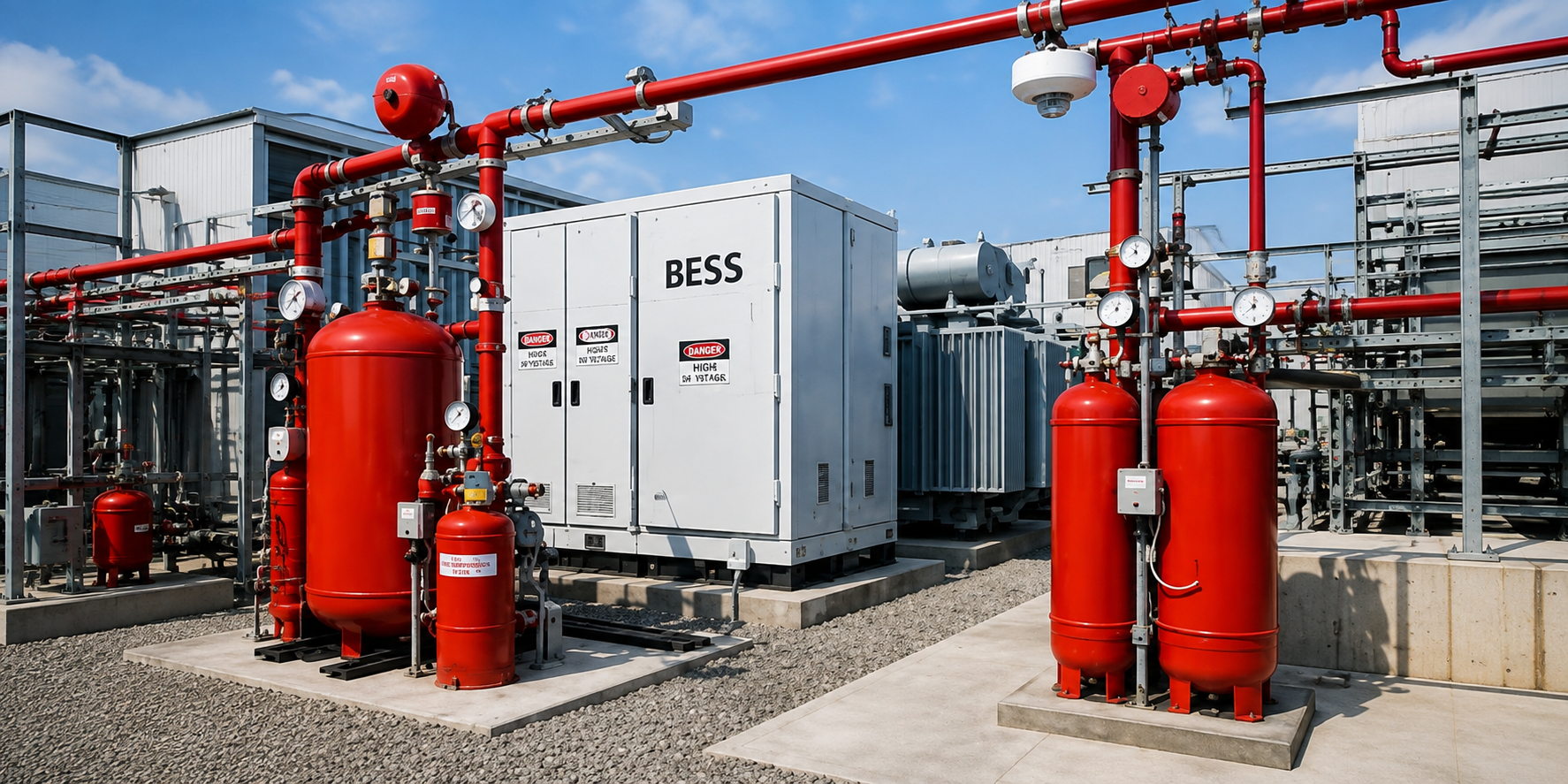
NFPA 855 provides an important framework for the safe installation of stationary energy storage systems, including requirements related to fire protection, system separation, hazard mitigation, and emergency planning.
Fire safety is an important part of BESS site assurance, but it is only one piece of a broader strategy that also includes electrical integrity, thermal management, controls, maintenance, and emergency planning. Best practices combine standardized fire inspection protocols with incident response planning, as demonstrated by San Diego County Fire Protection District's 2024 consultant-led review of fire safety standards for large battery systems.
Effective BESS site assurance brings together routine inspection, condition monitoring, electrical testing, thermal management, and documented commissioning and maintenance practices based on the equipment, site requirements, and applicable standards. Belenus Power Group applies field-proven protocols spanning battery system testing, DC field electrical commissioning, and emergency callout response, helping asset owners. EPC contractors reduce fire risk, minimize downtime, and maintain compliant, reliable site operations.
Key Takeaways
● BESS can support grid reliability by storing and dispatching energy, helping operators manage variability, peak demand, and other system needs.
● Lithium battery fires at some BESS installations demonstrate critical safety risks requiring comprehensive inspection protocols.
● Fire inspection requirements for BESS systems address increasing adoption of battery energy storage across grid infrastructure.
● BESS safety resource libraries provide training, protocols, and guides for installation and incident response procedures.
Why Do BESS Inspections Matter For Site Safety?
Site safety hinges on catching battery failures, electrical faults, grounding problems, controls failures, insulation degradation, and balance-of-plant issues, before they compromise safety, reliability, or system availability. Grid operators rely on battery energy storage systems to stabilize power flow when solar and wind output fluctuates. That stabilizing role only holds up if the equipment itself stays reliable. That makes routine inspection and maintenance an important part of protecting the reliability the system was designed to provide.
BESS Inspections give site teams a structured way to identify developing issues, track equipment condition, and turn findings into maintenance decisions. Lithium battery fires at storage installations have already raised legitimate safety concerns among host communities, and those concerns don't fade without visible action. A documented inspection program gives operations managers and compliance officers evidence that risks are being managed, not ignored.
What Happens When BESS Inspections Get Skipped?
Without consistent inspection and maintenance, developing issues such as abnormal temperatures, loose electrical connections, or equipment degradation may go undetected until they affect safety, reliability, or availability. EPC contractors and commissioning engineers who treat inspections as a formality inherit that risk once the asset transfers to operations. Consistent oversight, by contrast, keeps the system's grid-stabilizing function intact while protecting the communities living near it.
How Does Inspection Fit Into Broader Asset Management?
Inspection is one piece of managing power infrastructure safely at scale. Effective management of power plants matters for optimizing energy production and maintaining safety across high voltage environments. Storage assets are no exception. Belenus Power Group applies that same principle to critical power generation equipment, protecting and enhancing high and medium voltage assets through field expertise.
Site teams benefit most when inspection findings connect back to actionable maintenance decisions. Key priorities include:
● Verifying thermal and electrical conditions against manufacturer thresholds
● Documenting degradation trends before they escalate
● Confirming protective systems function as designed
The value comes from what happens next: documented findings give site teams the information they need to prioritize maintenance, address deficiencies, and make better decisions about the asset.
What Do Fire Safety Inspections Actually Cover?
Fire-safety inspections evaluate systems and conditions associated with overheating, thermal runaway, fire propagation, gas generation, detection, and emergency response. Lithium-ion cells, the technology behind most modern BESS installations, carry significant fire risk when thermal management, ventilation, or containment components fall out of spec. A thorough inspection catches those weak points before they become incidents, not after.
Three risk categories drive the inspection scope:
● Thermal runaway pathways - cell-to-cell spacing, temperature sensors, and cooling system integrity.
● Suppression readiness - because lithium battery fires can reignite hours or even days after crews believe the scene is clear.
● Gas emission controls - ventilation and monitoring equipment designed to manage the harmful gases these fires release, protecting nearby residents and first responders alike.
Why does reignition risk change inspection priorities?
Reignition risk is one reason BESS safety cannot be reduced to a one-time pass/fail inspection. Protective systems, monitoring equipment, and emergency procedures need to remain effective throughout the life of the asset. Inspectors confirm that suppression systems, containment barriers, and monitoring equipment stay reliable well after initial commissioning. A fire that appears extinguished can flare again without warning.
Do fire inspections replace electrical testing?
Fire inspections do not substitute for electrical testing. Belenus delivers critical HV/MV electrical services with a focus on safety. Precision, treating fire safety and electrical integrity as connected disciplines rather than separate checkboxes. Electrical integrity and fire protection should be evaluated as complementary parts of site assurance. A deficiency in either can introduce risk, even when the rest of the system is performing as intended.
For EPC contractors and site operations managers, this dual focus matters most during commissioning and ongoing asset management, when overlooked gaps translate directly into safety exposure and compliance risk.
What does fire suppression verification involve?
A suppression system that looks intact on paper can still fail in the field if components have degraded or interfaces were never confirmed. Belenus structures fire suppression verification around four steps: inspecting component condition and installation integrity, running functional testing to confirm activation and response readiness, performing maintenance on any deficient or degraded components identified, and verifying how the suppression system interfaces with alarms, controls, and auxiliary systems. Every step is aligned with industry standards and safety practices.
Treating suppression readiness as an ongoing verification cycle, rather than a one-time install check, gives asset owners and EPC contractors documented assurance that the system will respond correctly the first time it's needed.
How Does Grounding Protect Battery Storage Assets?
Earthing and bonding rank among the most critical safety systems for a reliable battery storage installation. Grounding and bonding are fundamental to electrical safety, helping provide controlled fault-current paths and reduce hazardous touch-voltage conditions around conductive equipment. Fault currents can travel unpredictable paths through equipment, creating shock hazards for technicians and shortening the life of expensive battery assemblies.
A properly engineered earthing system gives fault currents, lightning strikes, and other electrical disturbances a clear, low-resistance route away from personnel and equipment. This design principle applies directly to BESS sites. Dense arrays of battery racks, inverters, and switchgear sit close together under high electrical stress. Bonding helps minimize potentially hazardous differences in electrical potential between conductive components.
Why Do Ungrounded BESS Sites Face Higher Risk?
Without effective grounding and bonding, fault currents travel through unintended paths across the site. Equipment damage risk climbs, and so does the likelihood of a safety incident during normal operations or emergency response.
What Role Do BESS Inspections Play in Grounding Integrity?
Routine BESS inspections verify that earthing and bonding systems continue functioning as designed long after commissioning. These inspections help identify loose, damaged, corroded, or otherwise compromised connections and verify electrical continuity where required.
Asset owners and EPC contractors benefit from treating grounding verification as a recurring line item, not a one-time commissioning task:
● Confirm low-resistance paths remain intact for fault current and lightning events
● Verify bonding connections across racks, enclosures, and structural steel
● Document findings to satisfy compliance officers and support long-term asset value
Who Should Perform BESS Site Assurance?
Qualified electrical technicians with hands-on transformer and switchgear experience perform reliable BESS inspections. Untrained personnel miss developing fault conditions inside battery enclosures. Site assurance demands specialized skill and qualifications appropriate to the systems and scope being inspected.
Belenus field teams handle this work end-to-end, covering scheduled inspections through emergency callouts. That range matters. A team capable of both routine assessment and rapid-response troubleshooting restores uptime faster and reduces long-term risk to the asset.
What qualifications should a BESS inspection team have?
Inspectors need direct experience protecting electrical equipment, isolating faults, and managing power flow across a site. Medium-voltage switchgear serves as the backbone of utility-scale power systems. That same principle governs the balance-of-plant equipment inside a BESS installation. Technicians who understand switchgear behavior bring that expertise directly to battery site assurance work.
Belenus technicians build this expertise through:
● Hands-on field experience across HV and MV equipment
● In-house training programs
● National certifications recognized across the power infrastructure sector
Should site operators use in-house staff or specialized contractors?
The right approach depends less on whether the team is in-house or contracted and more on whether personnel have the training, qualifications, equipment knowledge, and field experience required for the work. EPC contractors and asset owners can reduce exposure by partnering with crews whose daily work centers on protecting equipment, isolating faults, and keeping power flowing safely across critical infrastructure.
What Belongs On A BESS Inspection Checklist?
A thorough checklist covers structural integrity, thermal management, fire suppression readiness, and electrical connections across every enclosure. BESS inspections confirm that a facility meets the fire safety standards identified in consultant studies commissioned to protect people and property near battery storage sites. Rising adoption of battery storage across the grid has created a heightened need for stringent safety measures, particularly around fire hazards specific to lithium chemistry.Site operations managers and EPC contractors benefit from organizing inspection items into clear categories rather than treating the checklist as a single undifferentiated task list.
A non-exhaustive, high-level inspection framework may include:
● Enclosure and structural checks - housing integrity, ventilation pathways, and access points
● Thermal monitoring systems - sensor calibration and alarm thresholds
● Fire suppression readiness - agent levels, detection triggers, and clear egress routes
● Electrical terminations - torque values, connection points, and insulation condition
● Documentation review - maintenance logs, prior inspection records, and compliance paperwork
How often should a BESS site be inspected?
Inspection frequency depends on site risk profile, equipment age, and local fire code requirements. Industry safety resource libraries organize guidance topically, moving from introductory material through applicable protocols and training resources, giving compliance officers a structured reference point for setting inspection intervals.
Why does checklist quality matter for asset performance?
Consistent, expert inspection work translates directly into measurable uptime gains and stronger long-term asset performance. A checklist built on documented fire safety requirements catches deficiencies before they escalate into outages or incidents.
FAQ
Why do BESS inspections matter for site safety?
Inspections catch battery failures before they escalate into fires. Grid operators depend on BESS reliability to stabilize power flow during renewable energy fluctuations. Routine oversight protects that stabilizing function.
What happens when BESS inspections get skipped?
Small issues like thermal drift, loose connections, and degraded cells compound into failures that threaten personnel and neighboring properties. EPC contractors who treat inspections as a formality inherit that risk once assets transfer to operations.
How does inspection fit into broader asset management?
Inspection findings connect to actionable maintenance decisions, including verifying thermal and electrical conditions, documenting degradation trends, and confirming protective systems function as designed. This discipline protects uptime, personnel, and public trust simultaneously.
